There's a lot of discussion today about children and screen time, often leaving parents wondering if it's helpful, harmful, or simply an unavoidable part of modern life. As parents, we often feel the immediate need for screens to soothe or entertain our children, especially when facing a world not always tolerant of
"noisy little ones".
As children grow older, social pressure and the fear of them feeling left out without their own device can also lead parents to introduce technology. These feelings of guilt, fear, and uncertainty are valid, and it's why understanding the facts and creating a thoughtful plan for your family's well-being is so important.
Understanding Today's Devices: Why They're DifferentWhile screens have been a part of family life for decades,
today’s handheld smart devices are fundamentally different. Their "private nature," endless content, and interactive design create a constant stream of stimulation,
flooding the brain with dopamine. This constant pull is something we're all vulnerable to, but
children and teens are especially sensitive given their developing brains.
The Cost of Over-Reliance: Missed Opportunities for GrowthWhen we rely on screens too often, we may unintentionally miss out on
valuable opportunities for growth. True
confidence and resilience are built through everyday challenges, such as overcoming boredom, frustration, or problem-solving.
Emotional, social, and physical development cannot flourish through constant screen engagement.
Empowering Parenting Strategies: Tools for Intentional Tech UseHere are some practical strategies to help your family thrive offline:
-
Routine and Consistency: Establishing clear routines provides kids with a sense of security, helping them learn what to expect and feel more at ease.
-
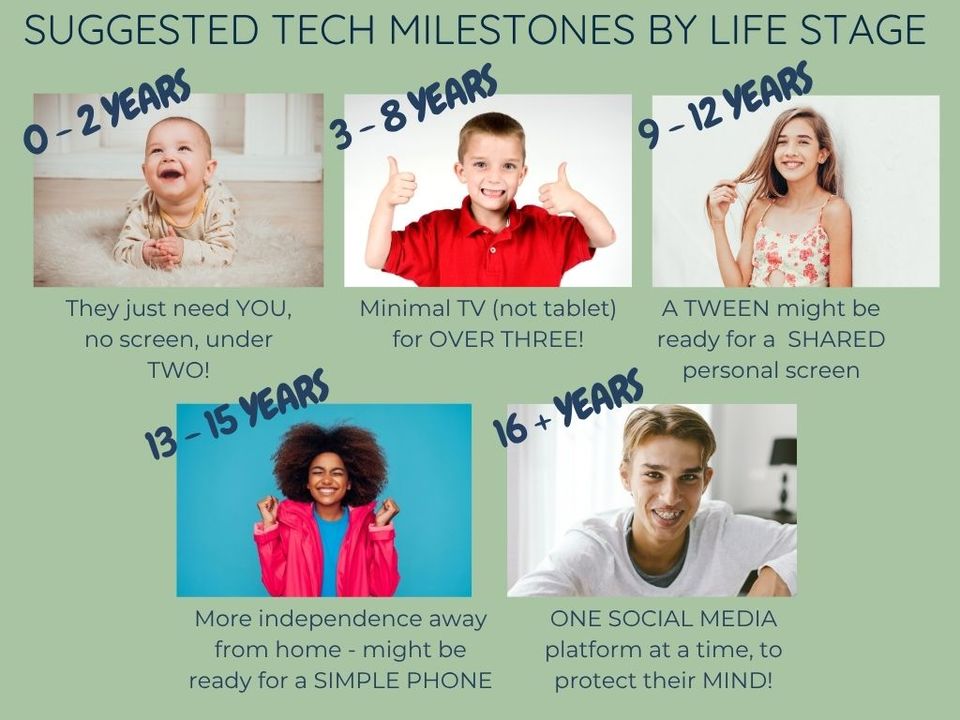
Age-Appropriate Conversations: Start talking about screen use early and keep those conversations going as your child grows.
-
Make a Boredom Plan: Before boredom sets in, ask your child what activities they enjoy and create a list together. This helps them learn to self-entertain and overcome initial frustration.
-
Pack an Activity Bag: For outings and restaurant visits, pack a bag with coloring supplies, play-doh, small figurines, or puzzles. Rotate items regularly to keep it fresh and fun!
-
Prioritize What Matters Most: Remember to prioritize meaningful connection, time in nature, and caring for yourself as a parent.
-
Be the Example: Show balanced tech habits by unplugging now and then. Kids learn most from what they see, so model the behavior you want to instill.
Parenting with screens can be a sensitive topic, even among close friends or between spouses. Every parent is doing their best with the knowledge and resources they have. Our hope is that this serves as an invitation to get curious and explore the tools that support healthy development and emotional well-being for kids and families.